introduction: focusing on the topic of "academic discussion on is the internet an american server and the future prospects of decentralization trends?", this article sorts out the core arguments from the infrastructure, legal and technical dimensions. the goal is to provide researchers and policymakers with both academic and practical analysis and suggestions.
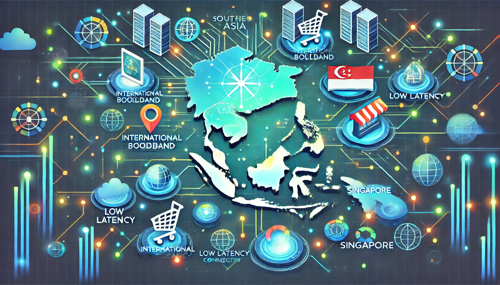
the internet is not the product of a single server or a single country, but is made up of millions of servers, fiber optic cables and switching nodes around the world. server distribution is affected by geography, economy and operational needs, and there are important nodes in europe, america and the asia-pacific region. academic emphasis is placed on differences in physical topology and traffic patterns to avoid equating the internet with a server network in a certain country.
the united states has significant advantages in early internet development, backbone routers, and cloud computing service provision, and has a large number of content distribution and backbone nodes. however, infrastructure is becoming globalized, with data centers and interconnection exchange points being established in many countries to reduce latency and dependency. academic discussions focus on the historical roots and current evolution of american influence.
regarding the question "is the internet an american server?", the academic community is divided into the historical structural school and the network decentralization school. the former emphasizes the impact of u.s.-led technical standards and institutions, while the latter points out that physical distribution and multinational participation make the internet more decentralized. the consensus is that evaluation should be conducted from a multi-dimensional perspective of governance rights, traffic paths and service deployment.
data sovereignty has become a focus of debate among countries, with legal jurisdiction involving data storage locations, cross-border transfers and law enforcement requests. even if data is stored on us servers, relevant legal and compliance frameworks affect access and protection. academic research calls for clarifying rights and responsibilities through treaties and standards to avoid imbalances in digital governance caused by a single jurisdiction.
content delivery networks (cdns) and edge computing are changing traffic paths and service locations, caching popular content to nodes closer to users. this trend reduces the centralized dependence on a few large data centers, improves performance and enhances localized control, and is an important technical driving force for promoting the practice of "decentralization".
decentralization is not a single technology, but includes multiple levels: decentralization of architecture (distribution of nodes), decentralization of governance (dispersion of decision-making power), and decentralization of services (no single point of failure). academic classification helps clarify evaluation metrics, such as the degree of decentralization and the trade-offs between resilience and efficiency.
blockchain and distributed storage provide technical paths for decentralized verification and data hosting, but they are not a panacea. blockchain has advantages in transparency and non-tamperability, and distributed storage can improve redundancy and availability. academic discussions focus on practical limitations of scalability, energy efficiency, and privacy protection.
decentralization may not only enhance the data autonomy of a country or community, but may also cause law enforcement and regulatory problems. distributed architecture reduces centralized control points but also complicates cross-border collaboration. researchers suggest that while promoting technological innovation, a transnational cooperation mechanism should be established to coordinate security and sovereignty needs.
technology choices, policies and regulations, and market dynamics influence each other. enterprises choose specific architectures to reduce costs and improve service performance, and policies guide the market through data localization or open standards. academic analysis emphasizes the multi-party interest game and proposes a combination of evidence-based policy tools.
the global public goods attribute of the internet determines that international cooperation is required to solve the problem of "is the internet a us server ?" standardization bodies, bilateral or multilateral agreements harmonize technical specifications and legal practice. the academic community calls for strengthening multi-stakeholder participation and balancing national security, personal privacy and business innovation.
in the future, decentralization will be dominated by hybrid architecture, with the core backbone and localized edges operating collaboratively. in the short term, the united states will still have important influence, but the trend towards multipolarity is obvious. the maturity of academic prediction technology, policy coordination and economic incentives jointly determine whether decentralization can be implemented more widely.
conclusion: focusing on “academic discussion of whether the internet is a us server and the future prospects of decentralization trends”, multi-dimensional evidence should be used to evaluate us influence and promote decentralization practices. recommendations include: promoting cross-border standardization, supporting edge infrastructure construction, prudent adoption of distributed technologies, and strengthening legal collaboration to achieve more secure, resilient, and fair internet governance.
- Latest articles
- Common Troubleshooting Steps And Rapid Recovery Solutions For Taiwan Telecom CN2 Broadband
- An Automated Operations And Maintenance Solution Covering Everything From Development To Monitoring How To Build A Site On Hong Kong Cloud Servers
- From A Business Perspective, Is Vietnam's VPS Reliable? Considerations Regarding Compliance And Data Security
- Free Server Korea Security Protection Policy And Backup Implementation Guide
- Cost And Operation Management Recommendations For Enterprises Deploying Korean CN2 Site Cluster Cloud Servers
- Basic Information On Taiwan Proxy Servers, Common Terminology Explanations, And Purchase Precautions
- How To Choose A Cloud Server In Thailand: From Network Latency To After-sales Service, Comprehensive Aspects
- Recommended Recommendations For Operators To Improve Thailand's High-Defense VPS Protection And Bandwidth Stability By Comparison
- Optimized Storage Costs For Hong Kong Hosted Servers, Hard Disk Servers, Layered Storage, And Cold Archiving Solutions
- Are Tencent Cloud Korean Servers Native? Recommendations For Local Service Provider Integration And Latency Optimization
- Popular tags
-

Analysis Of The Impact Of The Us Doomsday Server Kicking Controversy On Platform Trust And User Retention
analyze the short-term and long-term impact of the doomsday server kicking controversy on platform trust and user retention, and propose improvements at the operational, technical and compliance levels to help decision-makers formulate quantifiable repair plans. -

Computer Room Location And Redundancy Strategy The Significance Of Us Managed Server Room Layout To Business Continuity
analyze the key role of computer room location and redundancy strategies in ensuring business continuity in the layout of us managed server rooms, covering practical suggestions such as geographical distribution, power and cooling, network interconnection, physical security and compliance. -

Sharing Of Best Practices And Strategies For Participating In Us Website Groups
explore the best practices and strategies of us website groups to improve your website’s search engine rankings and increase traffic and conversion rates.